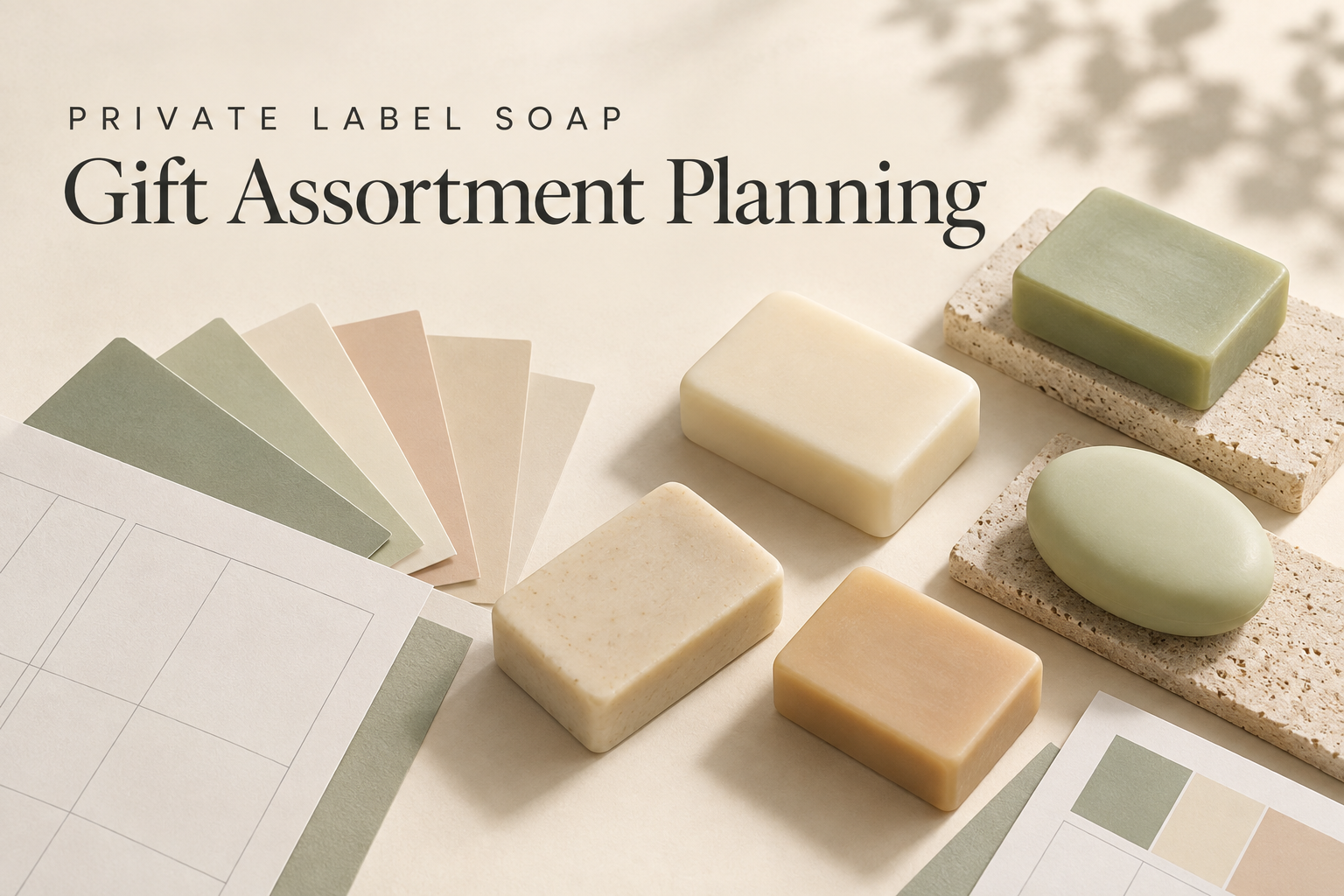
A private label soap gift assortment begins with a decision about the gift itself. Is the buyer ordering individual event favors, a coordinated retail set, or a branded addition to a larger gift? Each answer changes the number of sellable items, the contents of each pack and the information that must travel with the order.
An appealing soap shape can start the conversation, but a workable assortment needs a more precise description. Buyers should be able to explain what belongs together, which differences matter and what the recipient will actually receive. This guide turns those decisions into an assortment brief that a brand, purchasing team and supplier can read consistently.
The Lanthome cheese-shaped soap reference provides a useful starting point for that exercise. The planning examples below are hypothetical requests, not confirmed product configurations or commercial offers.
Read the soap reference before building the collection
The reference page identifies model or SKU 1601650328221. Its title includes cheese soap, custom scent and color, party favor, handmade and natural ingredients. The displayed service wording is OEM, ODM and private label; MOQ guidance says “Contact us.” The format and capacity fields do not provide values.
Treat that title as a set of discussion topics. It does not establish a complete ingredient list, a manufacturing process, a particular scent menu or the availability of every color a brand might request. Record desired options as questions until the supplier identifies what can be offered for the project.
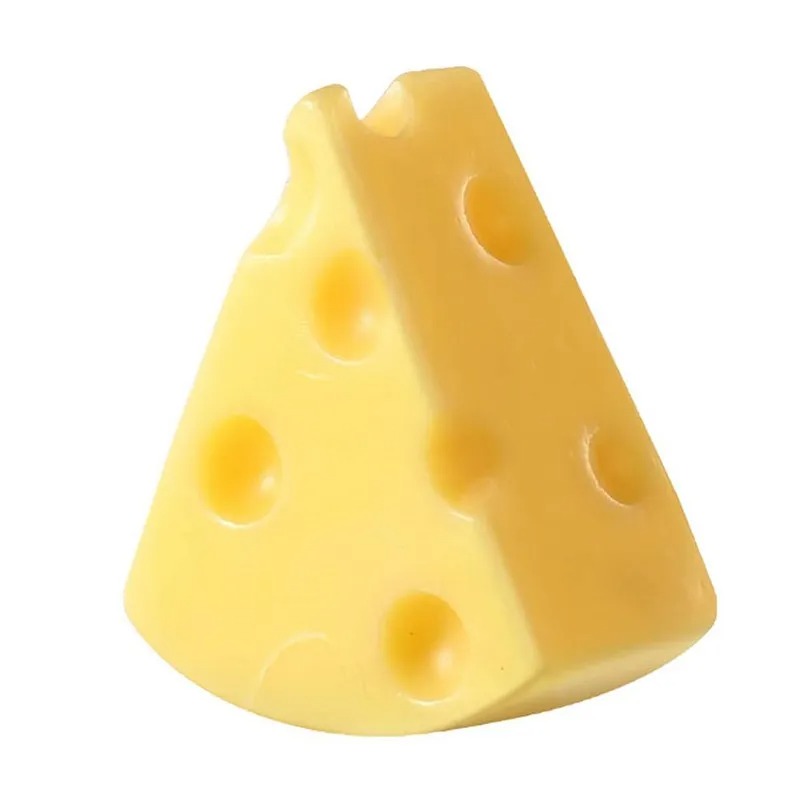
The main catalog image shows a yellow soap with a wedge outline and recessed details resembling holes in cheese. That is a visual reference for the shape. It does not demonstrate dairy content, fragrance, weight, dimensions or an included gift package. Keep those details out of a confirmed assortment description unless separate information supports them.
Start the brief with the source URL and SKU, followed by two short lists: information visible in the reference and information needed to define the gift. This gives later conversations a stable product identity without turning an imaginative concept into an assumed specification.
Define the occasion and the recipient experience
Write the occasion in ordinary terms before choosing colors or names. “An individually presented soap favor for an adult corporate event” gives the team a different assignment from “a three-piece soap gift sold through a boutique.” These are example concepts, not statements about the reference product's approved audience or available presentation.
Describe the point of handover
Explain who gives the gift, how it reaches the recipient and whether it will be presented alone. An item placed into an existing gift bag may need a different presentation brief from a complete set shown on a retail shelf. Ask which packaging proposals suit the intended arrangement rather than assuming the catalog photograph includes one.
Write a plain sentence describing the moment of receipt: “The recipient receives one identified soap item inside the event gift bag.” That sentence lets everyone distinguish the soap project from the bag, greeting card and other gifts supplied by different parties.
Separate the occasion from product instructions
An event theme is a creative direction, not an instruction for product use. Keep the occasion, intended sales channel and proposed visual mood in the assortment brief. Obtain the product description and use information separately for the specific offered version. The brand can then build a gift concept without inventing a use setting from the decorative shape.
Choose an assortment structure with a clear purpose
Decide whether the project needs one soap presented several ways, several soap versions in one set, or separate gift options sold alongside each other. Those structures create different ordering and content tasks. Write the chosen structure before assigning names to individual options.
A single-item favor could use one confirmed soap version and several event message cards. A coordinated set could contain multiple confirmed soap versions inside one outer package. A small gift range could offer a single-item option and a larger set. Each is a planning possibility; the supplier still needs to confirm the feasible product and packaging combinations.
Give every proposed sellable gift a reason to exist. If two gifts differ only in an internal project nickname, the buyer may not need two separate items. If their contents or customer-facing presentation differ, document the difference explicitly so that purchasing and content teams can keep them apart.
Begin with the smallest collection that communicates the intended idea. Add an option only when you can identify who it serves, how its contents differ and which additional files it needs. This is an assortment editing method, not a claim that a particular number of options will improve sales.
Name color, scent and shape versions separately
A decorative soap name can carry several meanings at once. “Golden Celebration” might refer to a visual theme, a yellow color, a proposed fragrance or an event package. Using that phrase as the only identifier leaves too much work for the person preparing the order.
Create descriptive working names
Use a short internal code alongside separate fields for shape reference, requested color, requested scent and presentation. An example working record could read “SOAP-A: wedge reference; color request pending; scent request pending; individual presentation proposal.” Pending is useful information. It tells the team that a creative decision still needs an offered version and an answer.
Do not let a color name imply an ingredient or a fragrance. A yellow appearance does not establish a lemon scent, and a cheese-inspired shape does not establish a dairy ingredient. Keep the visual direction and formulation description in different fields even when the eventual gift name combines them creatively.
Control the customer-facing name
After the offered version is identified, prepare a public name that makes the product type easy to understand. “Celebration Soap Gift” can function as a naming example; it is not an approved name for the source item. The final wording should agree with the actual contents and product information supplied for that version.
Retain the internal code when a marketing name changes. It provides continuity between the assortment plan, artwork files, quotation request and order discussion.
Write a pack contents record for every gift
Describe the contents of one finished gift before calculating the full project quantity. Count soap pieces, individual wrappers or containers, inserts, outer packaging and any proposed decorative components separately. Do not combine them under “gift set” and expect everyone to infer the same contents.
For a hypothetical two-piece gift, the contents record might request two identified soap pieces, one proposed outer box and one message card. The document should also say who is expected to supply each component. Those requests do not establish that the reference supplier offers boxes, cards or assembly.
Useful fields for each component include:
- Component name and internal reference.
- Quantity included in one finished gift.
- Product or artwork version associated with it.
- Party asked to supply it.
- Whether inclusion is confirmed, proposed or awaiting a response.
Separate included items from photography props and presentation ideas. If a ribbon, dish or gift bag appears in a concept image, state whether it belongs in the requested pack. Otherwise, the same image can be interpreted as an order specification by one person and visual inspiration by another.
Finish the record with a single readable contents sentence. Someone outside the project should be able to understand the proposed gift without opening every attachment.
Calculate quantities from gifts to components
Build quantity planning from the number of finished gifts, then calculate the components required by the proposed contents. Keep these calculations separate from a supplier's minimum order, quotation or packing arrangement, none of which is established by the reference page.
A hypothetical mixed assortment
Imagine an internal plan for 120 gifts: 80 single-soap gifts and 40 two-soap gifts. The single gifts each contain one proposed version A. The two-piece gifts each contain one version A and one version B.
That plan requires 120 pieces of version A and 40 pieces of version B, for 160 soap pieces altogether. If each finished gift has one message card, it also requires 120 cards. If the two gift formats use different outer packages, the planning quantities are 80 single-gift packages and 40 two-piece packages.
These numbers illustrate arithmetic only. They are not Lanthome order requirements, available quantities, recommended purchase volumes or an offer to supply these combinations. The buyer must ask how the actual offered options affect the commercial proposal.
Keep additional quantities visible
If the team wants extra components for photography or another named purpose, show them as separate lines with their reason and owner. Do not hide an unexplained allowance inside the total. When the gift mix changes, recalculate the component quantities from the contents records so that the order discussion reflects the current assortment.
Consider what happens if the hypothetical mix changes to 60 single gifts and 60 two-piece gifts. The project still contains 120 finished gifts and 120 pieces of version A, but it now needs 60 pieces of version B, for 180 soap pieces in total. The card quantity remains 120 under the same one-card-per-gift assumption. The two outer package quantities change to 60 each.
This comparison shows why a total gift quantity is insufficient for purchasing. A change in the mix can leave the number of recipients unchanged while altering the soap and packaging requirements. Keep the original scenario available as a comparison, then send the revised component totals with the updated gift list. Ask the receiving party to respond against that named revision so that an earlier quantity breakdown does not remain attached to the current proposal.
Make soap identity clear throughout the presentation
The wedge silhouette can be part of the gift's visual character while the wording still identifies the item clearly as soap. Give “soap” a visible role in the product name, contents description and proposed gift presentation. A playful theme should not force the recipient to guess the product category.
For a concept presentation, place the soap reference beside neutral layout elements and an explicit product caption. Avoid describing it as an edible treat or using a food description as its sole identity. Cheese-inspired appearance is a design observation; it should not become a statement about ingredients or a suggestion that the item is food.
Show the proposed gift as a complete arrangement and as its individual contents. A simple annotated layout can identify the soap, card and proposed outer package, with each item marked according to its confirmation status. The purpose is to make inclusion understandable, not to simulate a finished offering that has already been agreed.
Use captions to distinguish the catalog photograph from later project artwork. If an illustration uses a proposed color or package, label it as a concept. Once the actual gift is defined, replace those placeholders with matching product information and images before preparing the final customer-facing materials.
Request comparable answers for each proposed option
A useful inquiry presents the assortment first and then asks the supplier to respond to its individual parts. Include the source reference, occasion, proposed gift formats, requested soap variations and the contents record. This lets the discussion address a defined project instead of a loose request for “custom soap gifts.”
Ask which requested shape, color and scent directions have corresponding offered options. Request identifiers for the versions being discussed, along with the product information needed to describe them accurately. Ask the supplier to distinguish confirmed options from further development requests.
For the commercial response, request clarity about what each line covers. Does a proposed price refer to one soap piece, one packaged item or a complete assembled gift? Which proposed components are included, and which remain outside the offer? Ask how minimum quantities apply to the versions and gift formats under discussion.
Keep unresolved commercial details visible rather than filling them with expectations. The catalog's “Contact us” MOQ guidance is a reason to ask for a project-specific answer. It does not justify assigning a convenient order threshold to the assortment plan.
Assign ownership when an option changes
A change to one soap option may affect several gifts. If version A appears in both a single-item gift and a two-piece set, changing its name or presentation requires checking both records. The assortment structure should make that relationship easy to trace.
Name an owner for product version information, an owner for gift contents and an owner for customer-facing materials. One person may hold multiple roles, but every open decision should have a clear destination. Record who communicates the consolidated request to the supplier.
Write changes as specific actions: replace a proposed card, revise the requested scent direction, remove one gift format or change the planned mix. Identify the affected internal codes and ask which supporting information needs updating. A broad message such as “use the new option everywhere” leaves the scope uncertain.
Keep a short decision record with the date, change, affected gifts and current status. Mark superseded files clearly so that an earlier concept cannot be mistaken for the latest request. This is especially useful when event organizers, designers and purchasing colleagues work from different document collections.
Prepare the assortment handoff and answer common questions
Prepare a compact handoff containing the collection purpose, source reference, gift option list, contents records, component calculations and current open questions. Add the corresponding artwork and product references, using the same internal codes throughout. The reader should be able to move from a gift name to its components without reconstructing the conversation.
Can one soap version serve several occasions?
You can propose different occasion presentations around the same identified soap version. Confirm which elements remain common and which change, including messages, outer packaging and contents. Each finished gift still needs its own clear record when its included items differ.
Does every visual variation need a separate gift option?
Use a separate record when the difference changes what is being ordered or received. A mood-board alternative that has not been selected is a concept, not an additional sellable gift. Keep concept alternatives outside the final assortment count.
What should the first inquiry contain?
Send the product reference, intended occasion, proposed gift structures and a short list of decisions needing confirmation. Include quantity calculations as your planning scenario, with their assumptions visible. Submit the brief through the Lanthome project inquiry page to discuss the requested options and obtain the information needed to define a specific soap gift assortment.
Related Links
- Lanthome Cheese-Shaped Soap Reference - View the soap catalog reference identified by SKU 1601650328221.
- Skincare Products - Browse the site's product references and categories.
- OEM and ODM Development - Read the site's development information before preparing a project request.
- About Lanthome - Explore the company's introduction and project focus.
- Project Inquiry - Share an assortment brief and request details for the proposed options.
- Buyer Insights - Read additional articles for buyers and skincare brand teams.
- Balm Stick Retail Planning Guide - Explore a separate guide to organizing a balm stick retail concept.