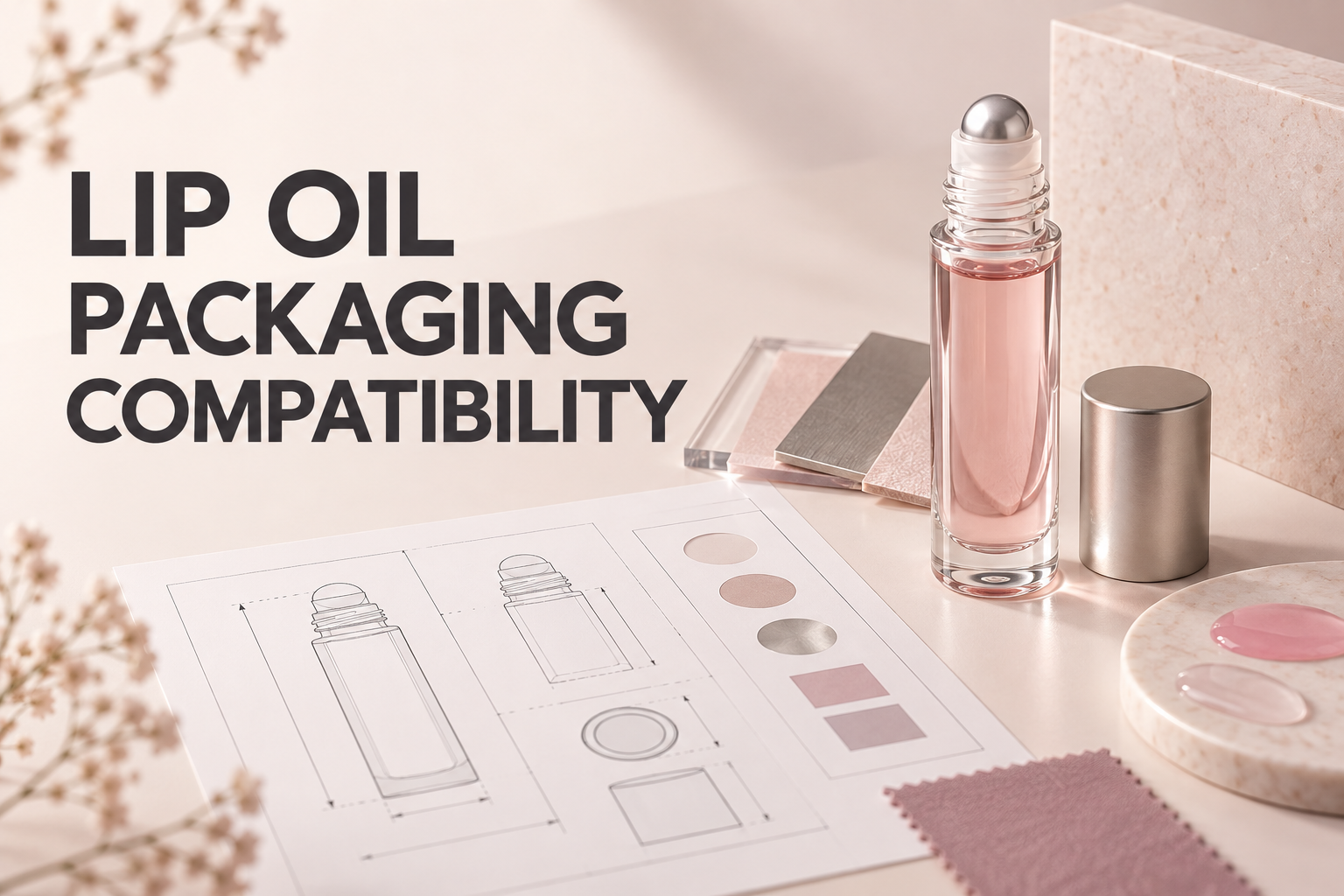
A private label lip oil project can look simple until the formula, applicator, container, artwork, filling process and retail presentation are reviewed as one system. For buyers, the most useful early question is not whether a package looks attractive. It is whether the approved product and the selected package continue to work together during handling, storage, transport and normal use.
This guide uses the Lanthome roll-on pearl lip oil catalog reference as a sourcing starting point. The live page places the item in Lip Care and offers OEM, ODM and private label service. Its source title uses roll-on, pearl, lip glow oil, lip gloss stick, vegan and non-sticky positioning language. Those words describe the catalog direction; they do not by themselves establish the final formula, ingredient declaration, test results or retail claims for a customer project.
The visible specification does not state a finished capacity or a numerical minimum order quantity. Buyers should request the applicable information for their selected formula and component instead of copying assumptions from a similar package. A compatibility plan turns those unknowns into specific sample checks and approval records.
Define the exact lip oil concept before selecting packaging
Write a short product brief that separates confirmed decisions from open questions. Record the intended format, target market, sales channels, visual direction, proposed package type, quantity range and launch timing. If “pearl,” “glow,” “roll-on” or “non-sticky” matters to the concept, identify whether it describes appearance, application, sensory direction or proposed marketing copy.
Do not let one long catalog title become the finished brief. The source page gives a useful reference, but the customer project still needs an approved product name and a controlled description. Teams should know which phrases are identifiers for sourcing and which phrases may appear on artwork.
Include a clear status beside every decision. Use labels such as requested, under review, sampled and approved. This prevents a component shown in an early mood board from being treated as the confirmed production pack.
The brief should also name the person responsible for formula decisions, component decisions and customer-facing wording. Compatibility work becomes difficult when a designer, buyer and supplier are each evaluating a different version.
Treat the formula and package as one system
Compatibility is not a property of the bottle alone. The bulk, the ball or applicator, the housing, seals, closure, decoration and filling conditions interact. A package that works with one lip oil may not be appropriate for another product with a different flow, suspended appearance or sensory target.
Ask the project team to identify the exact formula reference used in each package trial. Record the batch or sample code, date filled, component reference and assembly details. If the formula changes, decide whether earlier packaging observations remain relevant.
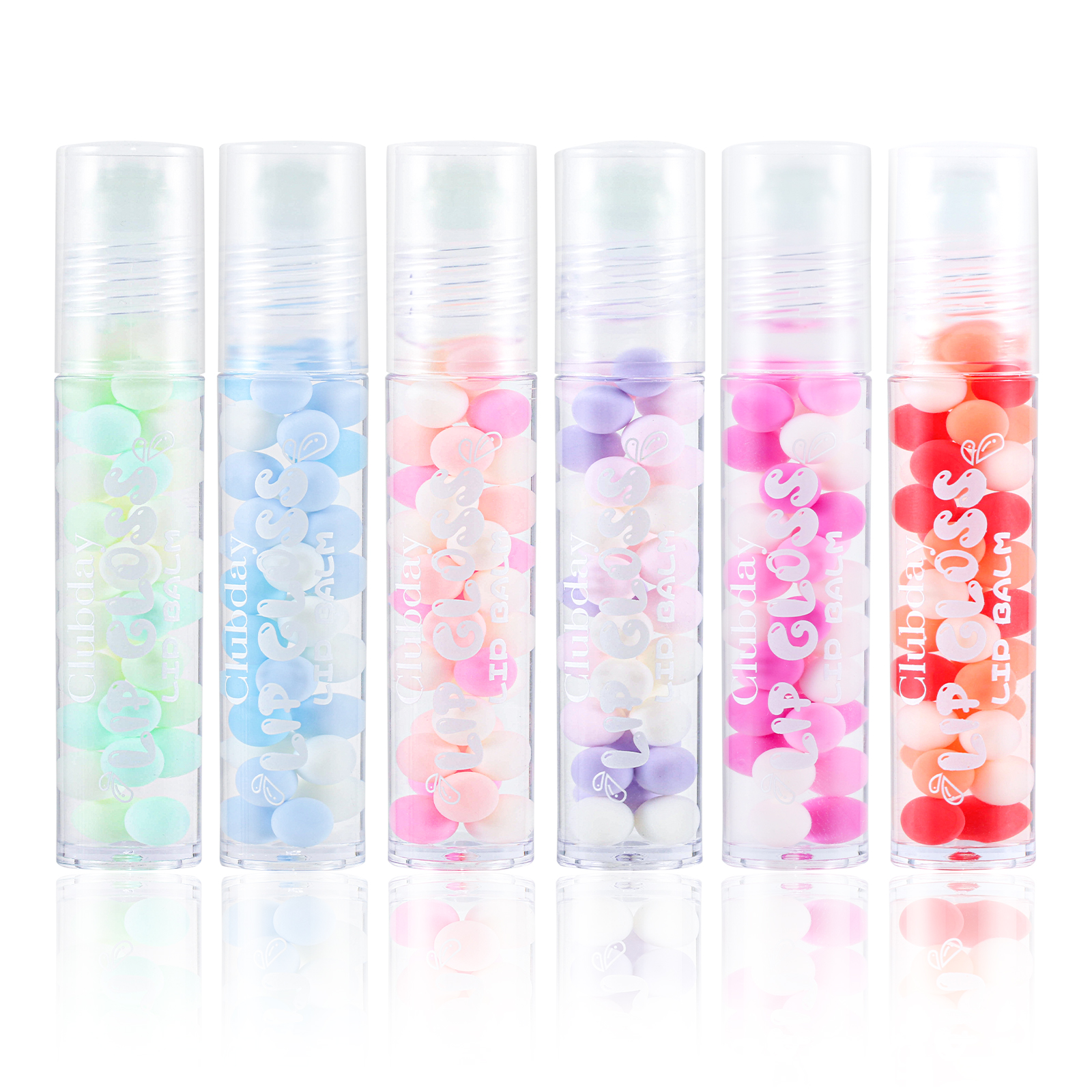
Avoid making technical conclusions from a catalog photograph. An image can show a roll-on format and a pearl-like visual direction, but it cannot confirm material compatibility, leakage performance, application rate or the behavior of a customer-specific formula. Those decisions require the applicable samples and project records.
Keep the approved formula and approved component linked in one master specification. When either changes, open a controlled review instead of assuming the other element will continue to perform in the same way.
Map every packaging component
Create a component list for the complete retail unit. Depending on the selected design, this may include the primary container, roll-on ball, insert or housing, cap, plug, wiper, label, decoration, carton and transport protection. Confirm the exact supplied configuration rather than relying on generic package names.
For every item, record the supplier reference, material information available to the project, color, finish, dimensions, decoration area and approval status. Note which measurements come from a controlled drawing and which are provisional.
Review the application interface
The roll-on assembly deserves a focused review because it controls product delivery and the user's physical interaction with the pack. During sampling, observe whether the approved formula reaches the ball consistently, whether the ball moves as intended and whether the application experience matches the brief.
Do not set an application promise before the exact sample is evaluated. Words such as smooth, even or effortless should reflect the approved combination and reviewed evidence, not a general expectation about roll-on packaging.
Check the cap and sealing surfaces as part of the same interface. A visually correct cap does not prove the assembled unit is suitable for the product or distribution route.
Build a compatibility test brief
A useful test brief describes what will be evaluated, which sample configuration is involved, who will review results and how a decision will be recorded. Ask the responsible technical team to define conditions and acceptance criteria appropriate to the formula, package and target market.
Potential observation categories include visible package change, formula appearance, odor, component fit, closure condition, leakage, applicator movement, dispensing behavior and decoration condition. These are planning categories rather than claims that a particular product has passed any test.
Record the orientation, handling and storage conditions used for each observation. A photo without a date, sample code and condition is difficult to interpret later. Keep control samples when the project protocol calls for them.
Do not invent a universal duration or temperature schedule. The responsible team should select a protocol for the exact configuration and intended distribution. If the project requires target-market documentation, identify that requirement before the final package is approved.
Evaluate leakage and closure performance
Leakage can affect product loss, carton appearance, customer experience and partner confidence. Review the fully assembled sample rather than testing an empty component and assuming the filled unit will behave the same way.
Observe the closure after ordinary opening and closing, handling and any project-defined transport simulation. Record whether residue collects around the neck, ball housing or cap. Note the fill level and assembly method because they may help explain differences between samples.
Separate observations from conclusions. A single clean sample is not proof of broad performance, and one damaged sample may require investigation before the team identifies a cause. Use photographs and sample references to support the decision.
If a leak or looseness appears, pause artwork and launch assumptions until the responsible team reviews the formula, fill, assembly and component tolerances. The corrective action may involve more than changing the cap.
Review flow and roll-on delivery
The product should be evaluated with the selected roll-on component because formula flow and applicator design influence each other. Ask reviewers to describe what they observe without converting a small internal trial into an unsupported consumer claim.
Use a repeatable sample evaluation sheet. Record the sample temperature or other relevant condition defined by the project, the number of uses or passes if the protocol specifies them, and the visible delivery pattern. Keep language neutral when the result has not been formally approved.
If the product has a pearl-like or suspended visual appearance, ask how that appearance is expected to behave during storage and use. Do not assume the visible elements in a source image are ingredients, active capsules or performance agents. Request the formula information that applies to the customer project.
Confirm that the package can be filled and assembled consistently using the intended process. A hand-filled concept sample can support early discussion, while production readiness requires the applicable manufacturing review.
Protect the visual concept without overstating it
A pearl lip oil concept may rely on clarity, shimmer, suspended appearance or a premium object-like presentation. Define the desired visual outcome using an approved reference sample and controlled photography.
Ask whether the appearance is part of the formula, the package decoration, lighting, or a combination. This distinction matters for artwork, e-commerce images and batch evaluation. A styled photograph should not create an effect that the offered product does not have.
Set acceptable color references through the project's approval process. Screens and studio lighting can shift color, so a digital image alone may be an incomplete standard. Label every image with the sample version it represents.
Avoid implying a functional benefit from decorative particles or pearl-like visuals unless the final product information and review support that statement. Visual storytelling can describe the format and experience without making unverified ingredient or efficacy claims.
Confirm fill volume and headspace
The source page does not publish a capacity. Obtain the confirmed fill quantity and unit for the chosen container before preparing labels, cartons, retailer data or freight calculations. Do not infer volume from proportions in an image.
Review the relationship between fill level, headspace, applicator insertion and the final closed unit. The project team should define how the filled sample is assessed and which visible differences are acceptable.
Make sure the declared quantity, package drawing, quotation and product record refer to the same configuration. If multiple sizes are under consideration, keep separate references so assets from one size do not migrate to another.
Photography should show the approved fill and component. If a concept render is used before final approval, label it internally and replace it when the production configuration is available.
Coordinate decoration with the component
Request the controlled artwork area and decoration requirements for the selected package. Review legibility, color, finish, registration and resistance expectations at actual size. A narrow or curved component may need a different information hierarchy than a carton.
Decide which information belongs on the primary pack and which belongs on the outer carton or other approved material. The final layout should reflect target-market requirements and the space available on the exact component.
Evaluate decoration after the project-defined compatibility and handling work. Formula residue, friction, cleaning or transport can affect the appearance of labels or printed surfaces. Record any change rather than hiding it in photography.
Keep the design file, proof and approved physical sample connected by revision number. A verbal approval such as “use the pink version” is too ambiguous when several finishes or print trials exist.
Review claims and product language
The source title contains hydrating, plumping, vegan, non-sticky and dry-lip treatment wording. Treat these as source-page positioning signals that require project-specific review before reuse. The final formula, documentation, target market and intended presentation determine what the brand can responsibly say.
Create a claims table covering the primary pack, carton, product page, retailer bullets, image text and advertising. For each statement, record its source, reviewer, status and approved wording. Remove or revise any statement that lacks the needed basis.
Be especially careful with “treatment” language and promises that imply a guaranteed change. A cosmetic lip product can be described with measured format and sensory language when supported, while medical or therapeutic implications require a different level of analysis and may be inappropriate.
Review translations for meaning, not only grammar. A translated phrase can become stronger than the approved source. Keep all language versions tied to one controlled claims record.
Prepare the sample evaluation session
Send reviewers the exact sample codes, evaluation questions and response deadline. Include enough context to compare samples without revealing which option the project team prefers. Consistent instructions make feedback easier to interpret.
Ask reviewers to assess packaging appearance, handling, cap operation, roll-on movement, product delivery, residue around the opening and overall fit with the brief. When sensory feedback is relevant, define the terms in advance so different reviewers use similar language.
Do not ask reviewers to diagnose reactions or make safety conclusions from informal use. Unexpected events should follow the project's escalation process and be reviewed by the responsible team.
Summarize feedback by sample reference. Resolve contradictions through another controlled check when necessary. The goal is an approval record that a later production or content team can understand.
Align commercial information with the approved pack
Use the quotation for the exact formula and component configuration when discussing price, quantity, samples and timing. The visible product page provides no numerical MOQ, so a buyer should request the applicable terms rather than publishing a guessed threshold.
Record which decoration, carton, insert and testing activities are included in a quotation. A lower package price may represent a different component or decoration scope. Compare like with like.
Identify decisions that affect timing, such as custom color, artwork proof, component availability or another compatibility review. Present tentative dates as planning information until the responsible party confirms them.
Keep commercial revisions with the product record. When the package changes, check whether the quote, sample plan, artwork and launch calendar also need updates.
Build channel-ready content from approved facts
Create one content source containing the confirmed product name, category, quantity, package description, approved wording, directions, image set and contact route. Adapt this record for each channel instead of creating unrelated descriptions.
Use accurate images of the offered configuration. A front view, cap-off view, roll-on detail and package-content image may help buyers understand the format when those images reflect the approved product. Write alt text that describes what is visible without adding unsupported benefits.
Keep the sourcing reference separate from the customer's retail identity. Existing logos, text or decorative elements shown in catalog images should not automatically become part of new artwork.
Before release, compare the final page with the approved sample and content record. Confirm the slug, title, metadata, image alt text, internal links and inquiry route. Search optimization should improve clarity without introducing claims the project did not approve.
Use a final compatibility approval gate
Bring the formula, packaging, artwork, quality, commercial and content owners together for a final review. Each owner should approve a specific record, sample or file. A general email saying “looks good” is not enough when versions can be confused.
Record clear outcomes
Mark every area ready, ready with a named condition, or blocked. A condition needs an owner and due date. If the package looks finished but the capacity, compatibility record or claims review is unresolved, keep the launch gate open.
Confirm that the final component and formula match the evaluated configuration. Confirm that artwork fits the approved drawing, images show the correct unit and partner files use current wording. Confirm that customer questions have an escalation route.
For a new project, use the Lanthome Lip Care reference and OEM, ODM or private label service as the starting point. Then ask the project team to confirm the formula reference, capacity, roll-on component, complete pack, artwork, applicable documentation, commercial terms and target-market wording. A clear compatibility record helps turn an attractive lip oil concept into a controlled sourcing decision.
Related Links
- Lanthome roll-on pearl lip oil reference- Review the source product and identify details that need project-specific confirmation.
- Product catalogue- Explore the site's skincare and lip care development references.
- OEM and ODM development- Read the site's product development information.
- About Lanthome- Learn about the company behind the site.
- Product inquiry- Share the target market, package direction, quantity range and launch timing.
- Buyer journal- Browse additional sourcing and brand-development guides.
- Private label capsule cream retail launch readiness guide- Use a cross-functional launch gate to align approved product, packaging and content records.