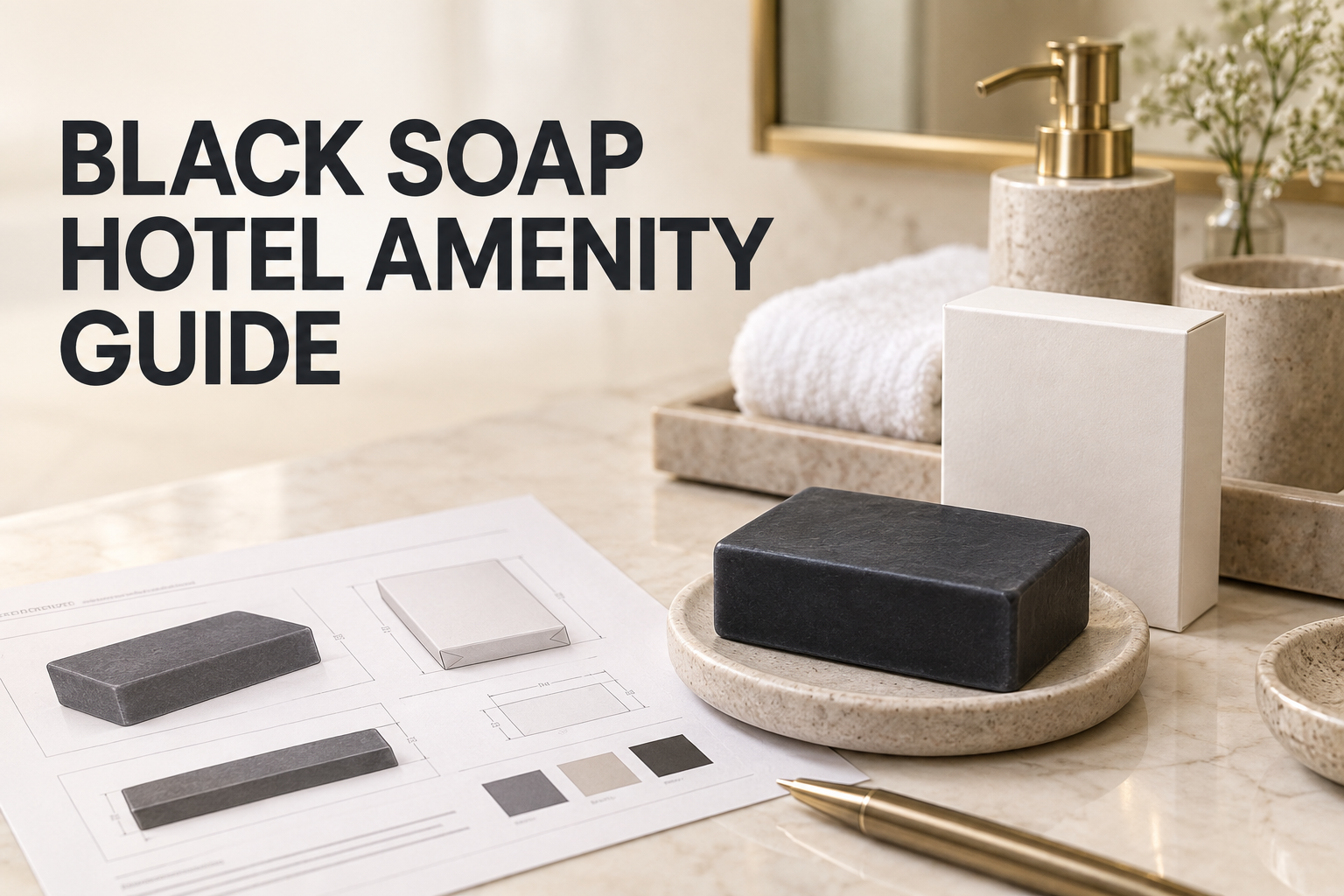
A private label black soap project for hotels needs more than an attractive bar and a logo. Hospitality buyers must align the approved product, unit format, wrapping, carton, housekeeping workflow, guest information and replenishment plan. When these details are managed separately, a concept that looks strong in a sample can become difficult to identify, store or distribute across properties.
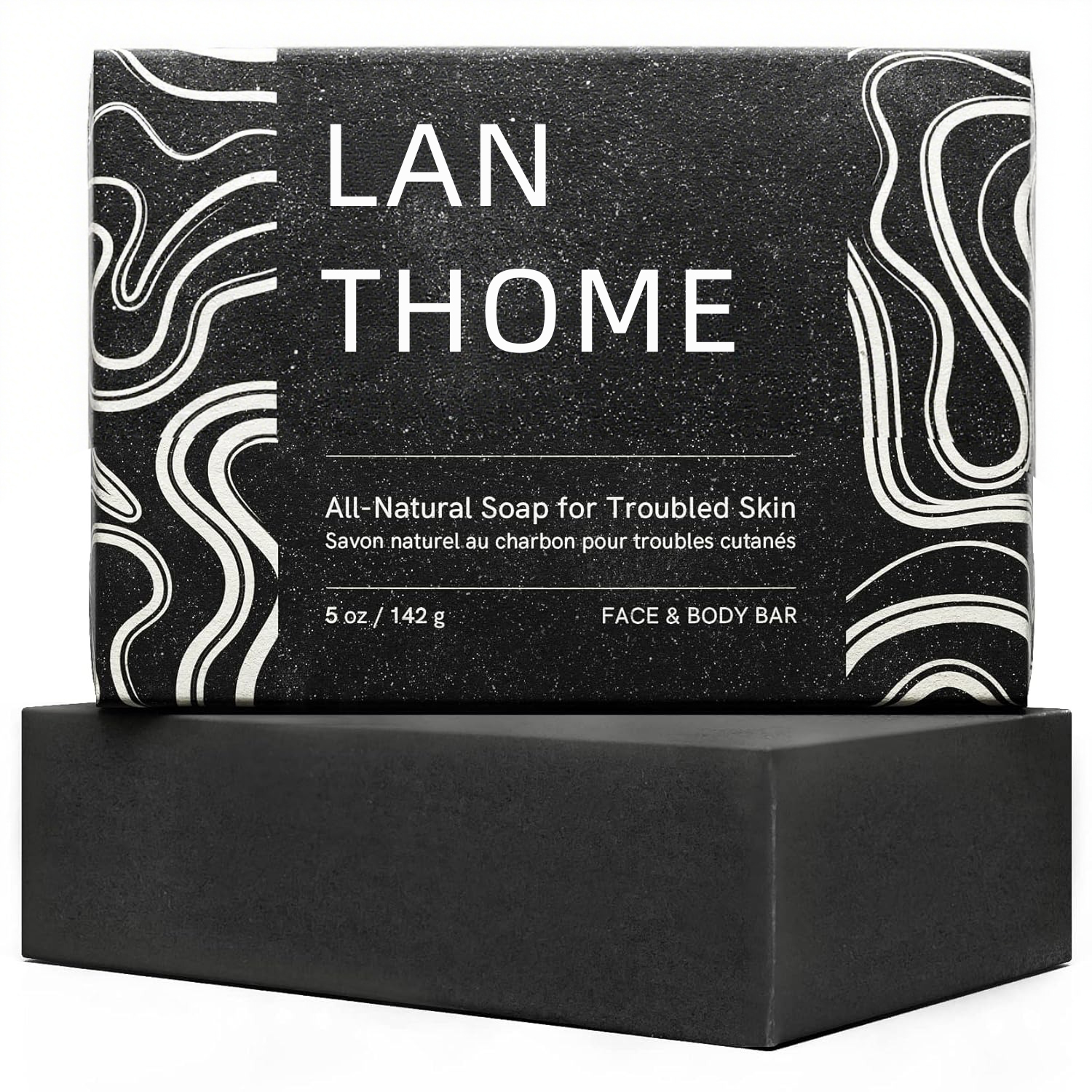
This guide uses the Lanthome black bar soap catalog reference as a practical starting point. The live page places the item in Body Care, identifies model 1601604706519 and offers OEM, ODM and private label service. Its source title uses vegan, black soap, bamboo charcoal, hotel and handmade positioning language. Those words describe the catalog direction; they do not by themselves verify the customer formula, ingredient declaration, production method, certification, test result or finished claim.
The visible specification does not state a bar weight, dimensions, numerical minimum order quantity or packaging configuration. Buyers should request the applicable facts for the exact version under discussion. A controlled hotel amenity brief turns these open questions into clear sample, artwork and supply decisions.
Define the hotel use case before requesting samples
Start with the guest experience and operating context. Record whether the bar is intended for guest bathrooms, welcome sets, spa areas, retail shelves or another approved use. State the property type, target market, room count, replenishment approach and expected presentation.
A boutique hotel may prefer a distinctive wrapped bar, while a multi-property group may prioritize consistent identification and simple replenishment. Neither direction should be assumed from the source title. Write the operational need first and then evaluate whether the catalog reference fits it.
List every stakeholder who must approve the project. Procurement may own commercial terms, brand teams may own artwork, housekeeping may review handling, and the responsible product team may review formula information and documentation. Give each decision an owner and status.
Avoid using “hotel soap” as the entire brief. That label does not confirm unit size, package type, fragrance direction, guest instructions, carton quantity or distribution requirements.
Create one controlled product specification
Build a master specification that identifies the catalog reference, model 1601604706519, customer project code, sample code, proposed bar configuration and packaging revision. Use this record whenever samples, images or quotations are compared.
The source page categorizes the item as Body Care and provides OEM, ODM and private label service. Record those verified facts separately from source-title phrases that still require confirmation. This distinction helps a buyer avoid turning a catalog descriptor into an unsupported retail promise.
Mark facts, proposals and open questions
Use clear labels such as confirmed by source, requested by buyer, under review and approved for project. A word such as bamboo charcoal may appear in the product title, but the applicable ingredient information still needs to come from the selected formula record.
The same rule applies to vegan and handmade language. Before those words appear on a hotel wrapper or guest information card, obtain and review the project-specific basis and target-market wording.
Keep superseded versions visible but clearly archived. A purchasing team should be able to tell which bar, wrapper and carton were approved without relying on a filename such as “final-new.”
Confirm the bar format and measurable details
Request the finished bar weight, dimensions, shape, color and other applicable physical specifications for the offered version. The live page does not publish these details, so they should not be inferred from the product image or a similar item.
Measure the approved sample using the method defined by the project team. Record the date and sample reference. If natural variation or storage changes are relevant to the product, ask the responsible team how those observations should be evaluated.
Check how the bar fits in the intended soap dish, amenity tray, gift box or retail display. A visually appealing sample may still be impractical if it does not sit securely in the selected fixture or wrapper.
Do not publish a unit weight or size until it matches the approved product, artwork, quotation and carton record. If more than one size is being considered, assign separate codes so images and documents do not become mixed.
Review formula information and claim boundaries
Ask for the information that applies to the exact sampled formula. The source title contains several positioning terms, but it is not a complete ingredient declaration and does not establish a finished claim for another brand.
Create a claims table for the wrapper, carton, hotel website, guest directory and retailer listing. Record each proposed statement, its evidence source, responsible reviewer and approval status. Remove or revise language that lacks the required basis.
Treat cleansing, skin feel, fragrance, ingredient, environmental and ethical statements as separate review items. A buyer should not assume that a dark bar color proves the presence or amount of a named ingredient.
Avoid medical or therapeutic language. Guest-facing copy should stay within the reviewed cosmetic and amenity context. If a property wants sensitive-skin, hypoallergenic, antibacterial or similar wording, route it through the appropriate documentation and target-market review rather than adding it for marketing appeal.
Evaluate the approved sample in the intended context
Design a sample review form before distributing bars. Include the sample code, package version, evaluation date and questions relevant to the hotel use case. Consistent questions make feedback easier to compare across procurement, brand and operations teams.
Review appearance, shape, surface condition, wrapper fit, ease of identification and placement in the intended fixture. When sensory feedback is part of the brief, define the terms reviewers should use instead of collecting vague comments such as “premium” or “not premium.”
Do not turn informal feedback into a test claim. A small internal review can support product selection, but it does not automatically prove performance, guest preference or safety across a market.
Photograph the sample with a visible reference code and neutral lighting. If the bar or wrapper changes, decide whether the earlier images remain valid for approval and training.
Select unit packaging for hotel operations
The unit package protects the bar, carries identity and shapes the guest presentation. Confirm whether the project uses paper wrap, carton, band, pouch or another reviewed format. Do not assume that the package shown in a catalog image is included in every quotation.
Ask for the component specification, dimensions, decoration area and material information available to the project. Review how the package opens, how the bar is identified before opening and whether required information remains legible at actual size.
Consider storage and housekeeping handling. Packaging should be evaluated in the conditions defined by the project, including the intended storeroom, housekeeping cart and guest-room placement. Record observations instead of promising universal durability.
If environmental positioning is important, separate material facts from broad sustainability claims. Obtain the applicable information for the selected package and review the wording before publishing it.
Build artwork around the actual print area
Request the controlled dieline or artwork area for the exact wrapper and carton. Establish hierarchy for the hotel name, product identity, quantity, required information and contact route. A small amenity pack cannot carry every message at equal size.
Review proofs at actual scale. Check legibility, color, registration, finish and the visibility of any required symbols or statements. Screen previews may hide problems that become obvious on a compact physical package.
Keep artwork revisions tied to the product and package codes. A color change or component change may require another proof. Do not rely on email descriptions when an approved file and physical reference can provide clearer control.
Existing printed wording or logos visible in source images are reference content only. They should not be copied into the customer's design without project-specific authorization and review.
Plan primary cartons and property distribution
Define how individually packed bars move from production to warehouse, property and housekeeping storage. Request the applicable inner pack and master carton information for the confirmed unit configuration.
Record carton quantity, dimensions, gross and net weights, labeling and handling information when those facts are confirmed for the project. The source page does not state them, so the launch file should keep these fields open until documented.
Use identifiers that housekeeping and purchasing teams can recognize. A carton label should distinguish product version, unit size, artwork revision and lot information required by the project. Similar black soap variants should not depend on visual guessing.
Ask the logistics team to review the distribution route and any project-defined transport or storage evaluation. A sample received at one office does not establish performance across every destination.
Prepare a housekeeping handoff sheet
Create a concise document for property teams that identifies the product, approved placement, package appearance, storage guidance supplied by the project, replenishment process and escalation contact. Keep it aligned with the final unit and carton.
Use clear photographs of the approved bar and wrapper. Avoid styled images that make the amenity appear larger, darker or differently packaged than the actual item. Include a version date so properties can remove old instructions when a change is released.
Housekeeping staff should know how to report damaged, opened, discolored or otherwise unexpected units without diagnosing a cause. The handoff should identify what information to capture, such as product code, lot reference, photos and storage location.
Test the document with someone who did not participate in development. If they cannot identify the correct unit or escalation route, revise the guide before distribution.
Align guest-facing content across channels
Create one approved content record for the wrapper, guest directory, hotel website, spa menu and retail listing. Channel copy may differ in length, but facts and claims should remain consistent.
Use a concise product name that accurately reflects the offered version. The full source title is useful for catalog identification, but it may be too long and may contain wording that has not been approved for the hotel project.
Write image alt text that describes the visible bar and package without adding unverified benefits. Metadata, page copy and visual text should refer to the same product identity.
If a property communicates ingredient or ethical positioning, link every statement to the approved project record. Translations should be reviewed for meaning because a fluent translation can unintentionally strengthen a claim.
Compare quotations on the same scope
Use the quotation for the exact bar, formula, unit package, decoration and carton configuration. The visible page provides no numerical MOQ, so buyers should request applicable commercial terms rather than publishing or budgeting from a guessed threshold.
Create a comparison table that includes sample scope, unit configuration, artwork work, packaging, carton, documentation and timing assumptions. A lower price may reflect a different wrapper, weight or service scope.
Record which decisions affect timing. Custom colors, printed packaging, another sample round or documentation review may change the sequence. Present tentative dates as planning information until confirmed by the responsible party.
Keep quotation revisions linked to the specification. When the bar or package changes, check whether pricing, sample approval, artwork and distribution planning also need updates.
Plan replenishment without inventing consumption data
Estimate requirements from property inputs such as room count, occupancy planning, placement rules, stay patterns and replacement policy. Keep the assumptions visible and update them with actual operating data after launch.
Do not present one hotel's consumption rate as a universal forecast. Different property types and housekeeping standards can produce different demand. Use scenarios rather than false precision.
Identify reorder points, review lead-time information provided for the project and assign a replenishment owner. The source page does not publish a lead time, so the schedule must come from current project communication.
Track artwork and product versions at reorder. A repeat order should confirm that the specification, package and guest-facing content remain current instead of automatically reproducing an outdated configuration.
Establish quality and issue records
Define the incoming checks appropriate to the approved product and hotel workflow. Potential record categories include product identity, unit count, visible bar condition, wrapper condition, carton condition and document match. The responsible team should set sampling and acceptance rules.
Separate an observation from a root-cause conclusion. Photograph the issue, preserve the identifiers and route the record to the appropriate owner. Avoid making unsupported statements to properties or guests while the review is open.
Create a simple change log. If the bar, wrapper, carton or wording changes, note the effective date and which properties or partners need updated materials.
Use recurring issues to improve the specification and handoff process. A controlled record supports better decisions than informal messages that lose the product version and context.
Run a cross-functional prelaunch gate
Bring procurement, brand, product, packaging, operations and logistics owners together before release. Each owner should approve a named sample, file or record. A general “approved” message is less useful than version-specific evidence.
Use clear gate outcomes
Mark each area ready, ready with a stated condition, or blocked. Conditions need an owner and deadline. A finished-looking wrapper should not override an unresolved bar specification, claims review or carton question.
Confirm that the approved bar matches the sampled formula and unit configuration. Confirm that artwork fits the correct package, cartons identify the right version, property instructions use current images and guest-facing copy uses reviewed facts.
For a new project, begin with the Lanthome Body Care reference, model 1601604706519 and OEM, ODM or private label service. Then ask the project team to confirm the formula information, bar weight and dimensions, unit package, artwork, carton, applicable documentation, commercial terms and target-market wording. That record gives hotel teams a reliable foundation for launch and replenishment.
Related Links
- Lanthome black bar soap reference- Review the source product and identify details that need project-specific confirmation.
- Product catalogue- Explore the site's body care and amenity development references.
- OEM and ODM development- Read the site's product development information.
- About Lanthome- Learn about the company behind the site.
- Product inquiry- Share the property type, unit format, packaging direction and quantity range.
- Buyer journal- Browse additional sourcing and brand-development guides.
- Private label soap gift assortment planning guide- Compare another soap sourcing workflow focused on assortment planning.