
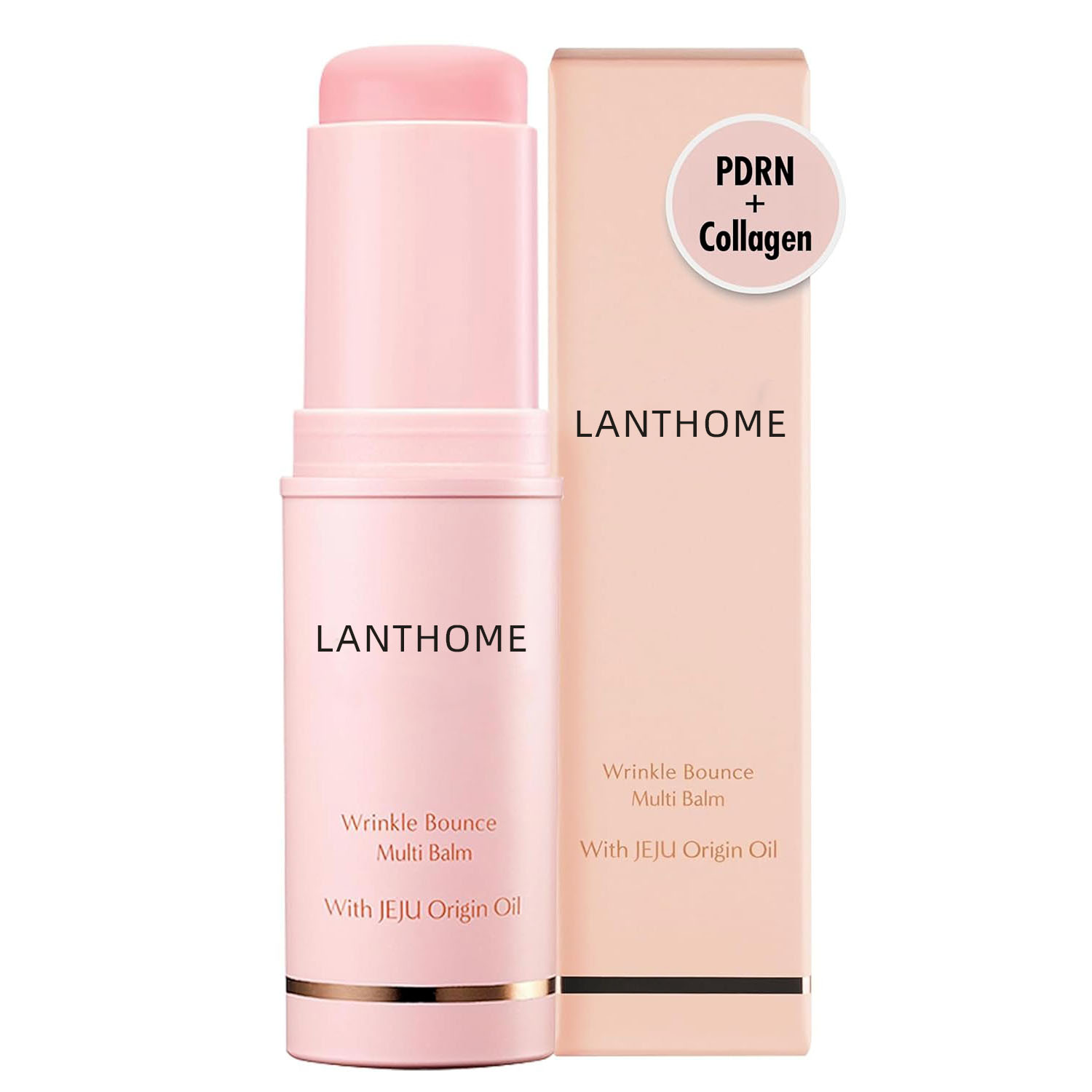
A private label PDRN balm stick can give a skincare brand a clear product development brief: a portable solid serum format, a defined ingredient direction, and packaging that can be adapted to the brand. Turning that brief into a product decision requires more than choosing an attractive sample. Buyers need to understand what they are evaluating, which details remain open, and what the supplier must confirm before an approved sample becomes an order.
The Lanthome PDRN Collagen Balm Stick provides the starting point for this guide. Its product page presents a pink, portable solid serum balm with a PDRN, collagen, and hyaluronic acid direction, alongside OEM, ODM, and private label options. Those details help identify the concept. They do not replace a complete specification for a particular brand project.
This guide explains how to request useful samples, compare them consistently, examine the component and artwork requirements, and record a supplier decision. It is intended for brand owners, purchasing teams, and product developers preparing a clear evaluation brief.
Define the Decision Before Requesting Samples
Start with one sentence explaining the decision the sample should support. For example: “We need to decide whether this balm format fits our intended application experience and whether the proposed component can carry our brand artwork.” This creates a practical boundary for the evaluation. It also prevents a favorable first impression from becoming an approval of details that nobody has checked.
Separate essential requirements from preferences. An essential requirement might be an agreed application area, a suitable label layout, or a specific closure function. A preference could be a softer pink appearance or a different surface finish. The distinction matters because a preferred appearance should not compensate for an unresolved essential requirement.
Then identify the decision makers. A buyer can assess the commercial proposal, a product developer can review the sample brief, and a packaging contact can check the component drawings. Assign each topic to a named owner. If one person handles several roles, keep the responsibilities separate on the evaluation sheet so that a sample does not receive an unexplained general approval.
Finally, decide the possible outcomes in advance: accept for further development, request a defined revision, or stop evaluating this option. “Looks good” is not a useful outcome unless it is attached to the exact version and conditions reviewed.
Separate Product Page Information from the Agreed Specification
Use the product page as a source of confirmed starting information, then create a second column for project details that require a written answer. The listed PDRN, collagen, and hyaluronic acid direction belongs in the first column. The complete ingredient declaration for the offered sample, the exact composition of the selected version, and any proposed product claims belong in the second until supplied and reviewed.
Apply the same discipline to packaging. A range of customization choices does not identify the exact component supplied with your sample. Ask which container, mechanism, finish, and decoration method are included in the current proposal. Record whether the sample represents the intended production presentation or simply demonstrates the product format.
Keep size terminology explicit. Request the proposed fill quantity, its unit, the container dimensions, and the space needed for labeling. Do not assume that a capacity option displayed online settles all of those details for a solid balm project.
Commercial details should also remain project specific. Ask the supplier to confirm the order quantity, pricing basis, sample conditions, and proposed schedule for the configuration being discussed. Record the date and version of that response. This gives the purchasing team a defined quotation to review instead of relying on a general website statement.
Request Samples That Answer Specific Questions
A useful sample request identifies the reference product, the intended brand concept, and the uncertainties you need to resolve. If you want to compare more than one option, name the variable being compared. For example, request a comparison between two available component finishes while keeping the offered formula version constant, or between proposed texture options using the same component.
Avoid changing several variables without a way to identify them. If a supplier provides samples with different appearances, components, and formulations, a preference for one sample will not explain which difference drove the decision. Ask for each sample to carry a unique code and for the supplier to describe every known difference.
Request a short sample information sheet. It should identify the sample code, preparation or issue date if available, formula reference, component reference, intended application instructions, and any limitations on what the sample represents. If final documentation is still being prepared, record that status rather than filling the gap with an assumption.
State the questions you expect to answer after receipt. These might include whether the stick advances smoothly, whether the cap closes consistently, whether application leaves the finish your brief describes, and whether the proposed label area accommodates the required content. A focused request makes the supplier's reply easier to compare with your evaluation results.
Compare the Application Experience Consistently
Before anyone tries a sample, review the supplier's intended-use information and confirm that the evaluation follows it. An internal experience review is an observation exercise. It does not establish ingredient efficacy, suitability for every consumer, or support for a public performance claim.
Use the same written procedure for each comparable sample. Record the application area permitted by the instructions, the number of passes, the observation intervals, and any other products involved. Keep those conditions consistent where practical. If you are exploring use alongside another product, record that combination separately so that the result is not confused with the balm alone.
Choose descriptive terms before evaluation begins. Useful categories may include initial drag, glide, visible deposit, perceived surface feel, and appearance after the chosen interval. Explain what each term means to the team. “Rich” could refer to resistance during application, an oily surface impression, or simply a brand association; those are different observations.
Ask evaluators to write what they noticed before discussing a group conclusion. Include mixed responses and relevant differences in the recorded conditions. A concise note such as “Sample B required more pressure than Sample A under the same procedure” is more actionable than “Sample B was worse.”
If an evaluation produces an unexpected response, pause that part of the comparison and seek appropriate guidance. Do not turn an isolated experience into a broad product claim.
Examine the Stick, Mechanism, and Closure as a System
Assess the proposed component with the sample it contains. A container that looks suitable in an empty mockup still leaves questions about dispensing, presentation, and closure when used with the offered balm.
Record how the stick advances and retracts according to the component instructions. Observe whether the action is smooth and controllable, whether the exposed product remains easy to position, and whether the mechanism behaves consistently during your defined review. Describe any issue with the sample code and, where useful, a photograph or short video.
Check the cap as a separate item. Note how it aligns, how it closes, and whether the closure is clear to the evaluator. Examine whether the product contacts the inside of the cap during the instructed use sequence. If a component change is proposed, repeat the relevant observations on that version instead of assuming the original result still applies.
Review the visible finish and assembly against an agreed visual reference. Record marks, inconsistent decoration, or unclear joins as observations for supplier response. Distinguish an actual sample issue from a proposed acceptance criterion that has not yet been agreed.
These checks support a development decision. Ask the supplier what formal testing and acceptance criteria are appropriate for the selected formula and component combination, and request the relevant documentation rather than treating a desk review as completed validation.
Turn Packaging Customization into an Artwork Brief
The Lanthome page offers artwork, capacity, and packaging flexibility. To make those options useful, convert them into a brief with identified deliverables and decisions. Start by asking which component drawing and decoration area apply to the version being quoted.
Provide the brand name, preferred logo assets, color references, finish preferences, and the hierarchy of front-facing information. Distinguish a visual concept from print-ready artwork. A concept can show the desired appearance; print-ready work must be prepared against the supplier's confirmed technical requirements.
Request the printable dimensions, placement limits, seam or curved-surface considerations, and any restrictions associated with the proposed decoration method. Ask for a proof that shows the artwork on the exact selected component. If a carton is being considered, review its drawing and content requirements as a separate item.
Test legibility using the actual proposed dimensions. A design that appears clear on a large screen may need revision when viewed at component size. Have the responsible reviewer assess the required product information for the intended market before approving final copy.
Record what approval covers. Approving the visual direction should not silently approve the ingredient declaration, claims, fill details, or quotation. Give the artwork proof its own version and approval record.
Ask for Evidence Before Turning Ingredients into Claims
Ingredient names can help define a product concept, but they should not become a shortcut to product-level promises. For this reference, the page's PDRN, collagen, and hyaluronic acid direction is a starting point for formulation discussion. It is not a complete ingredient declaration or evidence for a specific outcome.
Ask for the ingredient documentation associated with the exact formula reference offered to your project. Clarify terminology, ingredient identity, and any information your designated reviewer needs. Where a brand wants to describe ingredient sourcing or make a specific formulation statement, ask what documentation supports that wording.
Create a claims worksheet containing the proposed phrase, where it will appear, the evidence requested, and the person responsible for review. Include packaging, product pages, advertisements, and distributor materials so that different teams do not publish different promises about the same product.
Keep provisional marketing language visibly provisional. A supplier conversation about a possible formulation direction does not mean the final claim has been approved. If the supporting evidence is incomplete, revise the wording or keep it out of the launch copy.
This approach also makes revisions easier. When a formula, ingredient source, or product description changes, the team can identify which statements need another review instead of searching through disconnected drafts.
Use a Sample Scorecard with Clear Pass Conditions
A proposed scorecard can combine descriptive observations with simple ratings, but the ratings need defined meanings. Use a small scale that the team can apply consistently. For example, a score of one may mean “does not meet the written brief,” three may mean “acceptable with a defined revision,” and five may mean “meets the brief as observed.” These are internal decision labels, not test certifications.
Consider separate rows for application control, observed glide, visible finish, mechanism operation, closure function, decoration quality, and documentation completeness. Add a comment field and an evidence reference to every row. Without those notes, two identical scores may represent very different reasons.
Some topics should be conditions rather than averages. If the formula reference is unknown, the intended-use instructions are missing, or the selected component has not been identified, mark the relevant decision as pending. A strong appearance score should not mathematically erase an unanswered requirement.
Agree which observations matter most before scoring. A team focused on precise application may prioritize control differently from a team evaluating a broader application experience. Document that priority in the brief so that the final choice reflects a stated objective.
Finish the scorecard with one decision and the required next action. For example: “Request a revised artwork proof using the confirmed printable area; retain Sample A as the application reference.” That sentence connects evaluation evidence to a practical supplier request.
Convert Feedback into a Precise Revision Request
Group feedback by the item that needs to change: formula proposal, component, decoration, documentation, or commercial offer. This helps the supplier respond without guessing whether a general comment applies to the balm, its container, or its presentation.
For each requested revision, include the sample code, the observation, the desired outcome, and the way you will evaluate the next version. Instead of writing “make the packaging better,” describe the specific closure behavior or artwork placement that requires attention.
Ask the supplier to identify what changed when the next sample arrives. Maintain the earlier sample as a labeled comparison reference where appropriate, and record the new sample code separately. Do not reuse an old approval for a revised item merely because the product name is unchanged.
Close each issue explicitly. Mark it resolved, accepted with a stated limitation, still pending, or no longer relevant because the project changed. This creates a readable development history and prevents the same uncertainty from returning at the quotation or approval stage.
Build a Supplier Brief That Can Survive a Handover
A complete supplier brief should allow a colleague to understand the project without reconstructing a chat history. Open with the reference product and your intended positioning, followed by the decisions already made and the remaining questions.
Include the selected sample reference, formula documentation status, component reference, proposed fill details, artwork version, packaging preferences, and the evaluation findings. Attach the scorecard and identify any observations that still require supplier review. Link the current quotation to the same configuration.
Record ownership and sequence. Specify who reviews formulation information, who checks market-specific copy, who approves artwork, and who accepts the commercial proposal. Ask the supplier to confirm which development steps depend on earlier approvals.
The Lanthome OEM/ODM page offers a relevant route for discussing customization, while the inquiry page can be used to submit a project brief. Describe your requirements as requests for confirmation; do not present undecided details as capabilities already agreed.
Before proceeding, compare the approved references with the proposed order documents. Any change should be identified and reviewed by its owner. The goal is a shared, specific understanding of what the project includes.
Questions to Resolve Before Selecting a Private Label PDRN Balm Stick
What should be approved first? Establish the intended product brief and identify the sample and component versions before issuing a broad approval. Application observations, artwork, documentation, and commercial terms can have separate review steps. Make their relationships explicit so that one approval does not imply another.
Can the same findings be applied to a different size or container? Ask the supplier which evaluations must be repeated for the proposed change. Do not assume that results for one combination automatically cover another. Record the new configuration and the supporting information needed to assess it.
How should a brand compare a balm stick with another PDRN product? Start with the intended format and use experience, then create a separate brief for each reference. The PDRN Capsule Serum is another product reference to explore, but its documentation and evaluation should be considered on their own terms.
What is a useful next step? Prepare a one-page sample request naming the PDRN Collagen Balm Stick, your intended brand concept, the questions you need answered, and the people who will review the result. A precise request turns a product page into a workable sourcing conversation and gives both sides a clear basis for the next decision.
Related Links
- Lanthome PDRN Collagen Balm Stick - Explore the portable pink solid serum balm reference for a private label project.
- PDRN Capsule Serum - View another Lanthome product reference for a separate formulation and packaging discussion.
- Skincare Products - Browse the site's product catalog to identify relevant sourcing references.
- OEM/ODM Services - Explore the site's customization information before preparing a project brief.
- Lanthome Blog - Read additional skincare sourcing and brand development articles.
- About Lanthome - Learn more about the brand through its company information page.
- Project Inquiry - Submit a product development brief and request project-specific confirmation.